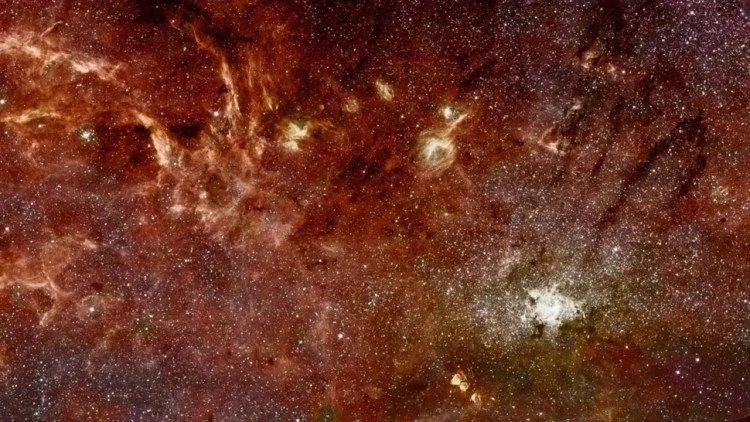
Synopsis: The Star Trek Scouts rescue three hatchling galactic pterodactyls and return them to their mother.
This episode can be seen as an illustration of Carl (C. G.) Jung’ concepts of inflation and deflation, as well as an enantiodromia, his term for the idea that integrating bits of material from the unconscious into the conscious ego is not a straightforward path, but goes one way until it can go no further and then comes back in the other direction.
In “Star Trek Scouts Stop a Mudslide & Save Dinosaurs!– Holodeck Rescues #3,”
the Star Trek Scouts entered a holodeck program and found themselves on an undiscovered planet where an alien animal’s wing was stuck under a fallen tree branch. Roo scanned the alien animal and learned that it was a galactic pterodactyl. JR asked Sprocket to give him a tractor beam device, and he used it to move a large boulder to deflect the path of the mudflow heading toward the galactic pterodactyl, and then used it again to remove the fallen tree branch that had trapped the galactic pterodactyl’s wing. But in moving the bolder JR diverted the mudslide toward a tree where the galactic pterodactyl’s nest and eggs were sitting atop one of its branches. The mudslide hit the tree and knocked the nest off of the tree branch and into the mudslide heading toward the edge of a cliff. The galactic pterodactyl’s wing was injured, so she could not fly to her nest and save her eggs, which had started to hatch. Roo used her hoverboard to catch the nest before it fell over the cliff and the hatchling pterodactyls were returned to their mom.
In this episode, when the Star Trek Scouts initially rescued the mother galactic pterodactyl, they felt the god-like power of inflation. But when they realized that by rescuing the mother galactic pterodactyl they had put her nest into danger, they experienced what Jung would call deflation, when one feels smaller because of the ending of the feeling of inflation. Jung identified inflation as a “puffed-up attitude”—a loss of free will and delusion that occurred when the conscious ego identified too long or too strongly with the god-like power of an archetype (1943/1966, p. 71 [CW 7, para. 110]). Deflation, on the other hand, is the resulting opposite feeling of disconnection and weakness that occurs after the state of inflation had ceased (Edinger, 1972/1992, p. 62). However, Jung believed that this “moral defeat” was necessary “because otherwise one will never attain that median degree of modesty which is essential for the maintenance of a balanced state” (1951/1968, p. 25 [CW 9ii, para. 47]). Put simply, the ups and downs of feeling powerful and connected sometimes and then isolated and fragile at others, is all part of life and the individuation process. Jung had a term for this continual movement back and forth from opposite ends of a spectrum, this “running counter to”—an enantiodromia (1921/1971, p. 425 [CW 6, para. 708]), originally a Greek expression signifying “that everything eventually turns into its own opposite” (Rowland, 2002, p. 30).
References:
Edinger, E. F. (1992). Ego and archetype: Individuation and the religious function of the psyche. Shambhala. (Original work published 1972)
Jung, C. G. (1966). On the psychology of the unconscious (R. F. C. Hull, Trans.). In H. Read et al. (Eds.), The collected works of C. G. Jung: Vol. 7. Two essays on analytical psychology (2nd ed., pp. 1–119). Princeton University Press. (Original work published 1943) https://doi.org/10.1515/9781400850891.1
Jung, C. G. (1968). The collected works of C. G. Jung: Vol. 9 pt. 2. Aion: Researches into the phenomenology of the self (R. F. C. Hull, Trans.) (H. Read et al., Eds.). Princeton University Press. (Original work published 1951) https://doi.org/10.1515/9781400851058
Jung, C. G. (1971). The collected works of C. G. Jung: Vol. 6. Psychological types (R. F. C. Hull, Trans.) (H. Read et al., Eds.). Princeton University Press. (Original work published 1921) https://doi.org/10.1515/9781400850860
Rowland, S. (2002). Jung: A feminist revision. Polity.

 mydailysoultrek